
Beyond Sales: Using Educational Marketing to Establish Trust and Build Customer Loyalty
In today’s fast-paced and highly competitive business landscape, simply pushing products or services is no longer enough. Customers are more informed, more selective, and more likely to engage with brands they trust. This shift has led businesses to move beyond traditional sales-driven marketing toward more value-focused approaches. One such approach is educational marketing.
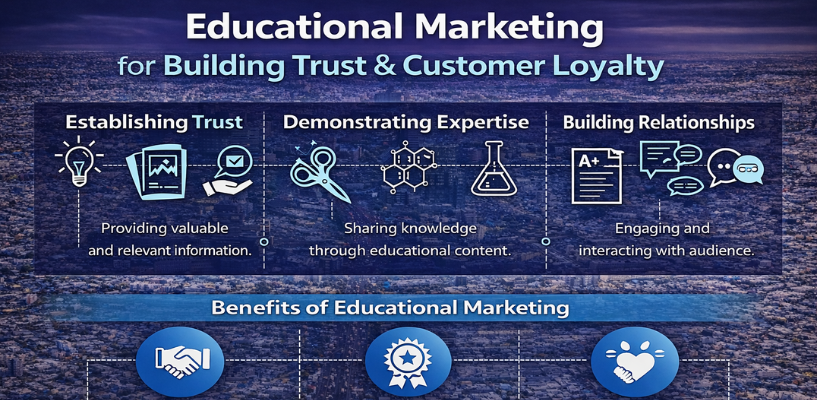
Educational marketing focuses on providing helpful, informative, and problem-solving content rather than direct sales messaging. By educating your audience, you position your business as a trusted authority, strengthen customer relationships, and build long-term loyalty. In this blog, we explore what educational marketing is, why it works, and how businesses can implement it effectively.
What Is Educational Marketing, and How Can It Benefit Your Business?
Educational marketing is a strategy centered on sharing knowledge, insights, and practical information that helps potential customers understand a problem, learn a solution, or make better decisions. Instead of aggressively promoting a product or service, businesses focus on delivering value through education.
This approach benefits businesses in multiple ways. By offering relevant and useful content, brands can build credibility, nurture trust, and create meaningful engagement with their audience. Over time, this trust often translates into stronger brand loyalty, higher-quality leads, and increased conversions.
Educational marketing also supports long-term growth by attracting customers who are genuinely interested in what your business offers, rather than those responding to short-term promotions.
Establishing Trust Through Educational Content: Building Customer Loyalty
Trust is the foundation of customer loyalty, and educational content plays a critical role in earning it. When businesses consistently provide information that helps customers solve problems or understand complex topics, they demonstrate genuine care for their audience’s success.
Customers who benefit from this content begin to associate the brand with reliability and expertise. Over time, this trust encourages repeat engagement, stronger brand affinity, and long-lasting customer relationships. Rather than viewing the business as just another vendor, customers begin to see it as a helpful partner.
The Power of Thought Leadership: Positioning Your Business as an Industry Expert
One of the strongest advantages of educational marketing is its ability to establish thought leadership. By sharing insightful, well-researched, and practical content, businesses can showcase their industry knowledge and experience.
Thought leadership builds authority and differentiates your brand from competitors. When customers perceive a business as an expert voice in its field, they are more likely to turn to that business when they need products, services, or guidance. This credibility not only strengthens brand recognition but also reinforces trust at every stage of the customer journey.
Providing Value Through Education: Generating Leads and Converting Customers
Educational marketing is not just about awareness—it also supports lead generation and conversions. Informative content naturally attracts users who are actively searching for answers or solutions. These users are often more qualified and more likely to convert than audiences reached through purely promotional campaigns.
As customers engage with educational content, they become more familiar with the brand and its offerings. This familiarity reduces hesitation and builds confidence, making customers more comfortable taking the next step—whether that’s signing up, requesting a consultation, or making a purchase. Educational content helps guide users through the sales funnel in a natural and non-intrusive way.
Effective Strategies for Implementing Educational Marketing in Your Business
There are several effective ways to integrate educational marketing into your strategy. Creating blog content that answers common customer questions is a strong starting point. Podcasts, videos, and downloadable guides can also provide value in more engaging formats.
Webinars, workshops, and online courses allow businesses to educate audiences in real time while building deeper connections. Social media platforms can further amplify educational content by encouraging discussions and direct engagement.
To succeed, educational content should be tailored to the needs and interests of your target audience. Measuring performance through metrics such as website traffic, engagement rates, lead quality, and conversions helps refine the strategy and ensure continued impact.
Conclusion
Educational marketing is a powerful and sustainable way to build trust, establish authority, and foster customer loyalty. By focusing on education rather than direct selling, businesses can create meaningful connections that lead to long-term success.
When brands consistently provide valuable, relevant, and engaging content, they position themselves as trusted experts rather than just sellers. To maximize the impact of educational marketing, businesses must understand their audience, address real problems, and deliver content that genuinely helps customers succeed. Over time, this approach strengthens relationships, drives growth, and creates lasting competitive advantage.
FAQs
What is educational marketing?
Educational marketing is a strategy that focuses on sharing helpful, informative content to educate customers rather than directly selling products or services. It helps businesses build trust and authority over time.
How does educational marketing build customer trust?
By consistently providing valuable and problem-solving content, businesses demonstrate expertise and genuine care, which helps customers view the brand as reliable and trustworthy.
Is educational marketing suitable for small businesses?
Yes, educational marketing is highly effective for small businesses because it allows them to compete by showcasing expertise, building credibility, and attracting high-quality leads without large advertising budgets.
What types of content work best for educational marketing?
Blogs, guides, webinars, podcasts, videos, social media posts, and FAQs all work well when they address customer questions, explain concepts clearly, and offer actionable insights.
How does educational marketing help generate leads?
Educational content attracts users searching for information. As they engage and gain value, they are more likely to trust the brand and move toward conversions such as inquiries or purchases.
How long does it take to see results from educational marketing?
Educational marketing is a long-term strategy. While engagement can grow quickly, trust-building and conversions typically improve steadily over time with consistent content efforts.
Latest Blog
-
.png)
What Makes a Restaurant Trustworthy for First-Time...
Restaurants require first-time customers to fac...
-
.png)
Why Location-Based Searches Convert Faster Than No...
Many customers use search engines to find store...
-
.png)
Local Search Trends in 2026 Every Business Owner S...
Many business owners rely on search engines to ...